
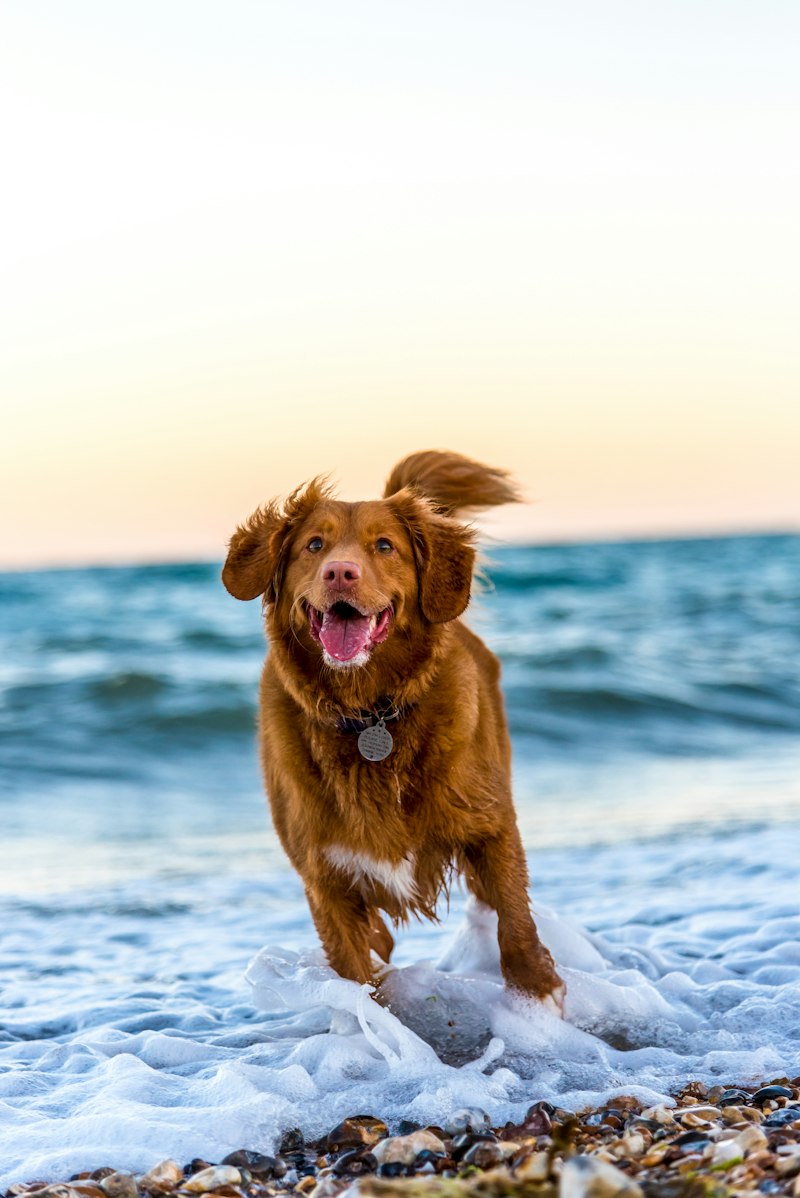
What Knockbracken actually looks like by February
Search for dog walks near Belfast in July and you'll get photos of dry stone lanes and dogs paddling happily at the water's edge. Come back in February and it's a different place. The compacted stone-and-clay surface that carries walkers fine in summer turns soft at the edges, the reservoir itself sits higher and greyer, and the hedgerows either side of the lanes hold their drip long after the rain has actually stopped.
It's still a genuinely good walk — long enough to tire a dog properly, varied enough not to get boring, and quiet enough most weekday mornings that you're not constantly on the lead for passing dogs. But if you're new to it, or you're the kind of owner who normally sticks to Belvoir or Cherryvale, the change in ground condition through autumn and winter catches people out. The low winter sun does something odd along a couple of the more open stretches too, sitting right at eye level in the afternoon, so a dog running loose can vanish into the glare for longer than feels comfortable.
Where the mud actually collects
It's rarely the whole lane that's the problem — it's the specific spots where water has nowhere else to go. Field gates and gaps in the hedgerow are the obvious ones: every dog, every walker and, at various points in the year, sheep or cattle funnel through the same narrow gap, and the ground there gives up long before anywhere else. The same goes for stiles and any point where the lane narrows.
The other pattern worth knowing is shade. Stretches that run under mature trees or along a north-facing hedge line simply don't get enough sun or wind to dry out between showers, even on days when the open sections look fine. Old field drains that were never meant to carry a footpath's worth of water tend to resurface right where you'd least expect them, so a section that looked solid last week can be ankle-deep this week for no obvious reason.
Which entrance is quieter when it's like this
There's generally more than one way onto the lanes, and in wet weather it's worth using whichever one avoids the busiest pinch point rather than the one that gets you to the water fastest. The entrance that most walkers head for tends to be the one closest to the reservoir edge itself, and that's exactly the spot that churns up fastest once a few dozen boots and paws have been through it on a wet morning.
A quieter farm-lane style entrance usually exists a bit further round, and it's worth using that one if your dog is nervous around other dogs or if you'd simply rather not queue at a muddy gate. Wherever you park, leave room for anyone else needing to get past, and check the current signage at the entrance before letting a dog off — on-lead sections can shift with the season, particularly around lambing time or when ground-nesting birds are about.
The kit that actually earns its place in the boot of the car
None of this is exotic gear. It's just the difference between a walk that's unpleasant and one that's fine.
Wellies are fine for a short stretch but they slip on wet clay and offer nothing for ankle support over a longer loop, so a proper pair of walking boots is worth the outlay if you're doing this more than once a week. Waterproof over-trousers matter more than a good coat, because it's the brush against wet, muddy hedges and long grass that soaks jeans through, not the rain itself.
- Walking boots with actual ankle support, not wellies, for the longer loops
- Waterproof over-trousers rather than relying on the coat
- A second lead or slip lead as backup for slick, muddy ground
- An old towel doubled in the boot, plus a dog drying coat if yours tolerates one
- A head torch and hi-vis for you and the dog once the clocks go back
- A few extra poo bags — wet ones tear more easily than you'd think
- Paw balm for pads that see a lot of cold, wet ground
How do you deal with a dog that's soaked and filthy before you're even back at the car?
Have the towel out before you open the boot, not after. Mud dries fast in a warm car and then it's everywhere, so a rough dry-off at the car, working from the head down and finishing at the belly and legs, saves a lot of hoovering later. Check between the toes properly even in winter — thorns and small stones don't disappear just because it's cold, and a dog that's been through standing water at a gateway can pick up plenty in the pads.
If your dog's been in the reservoir itself, or in any of the standing pools near the lower gates, give the ears a look too, especially on floppy-eared breeds, and dry them properly rather than leaving them damp for the car journey home. It's not glamorous, but it's the bit that actually prevents the following week's vet visit.
Is it ever genuinely not worth going?
Yes, and it's worth being honest about that rather than forcing it. The shaded, north-facing stretches can hold ice for days after the open ground has cleared, and that's a real hazard for an older or arthritic dog, or for you carrying a lead in one hand and trying to stay upright. After heavy or prolonged rain, some of the low points can hold enough standing water that walking through it isn't sensible, and wind funnelling across the open reservoir stretch on a genuinely wild day is unpleasant for both of you.
On those days, a shorter walk somewhere sheltered followed by a warm, dry morning of play and company does more good than a miserable slog through ankle-deep mud. That's part of why day care exists — at Johnny's Doggy Hotel, plenty of local dogs come in on exactly the mornings their owners have looked at the forecast and decided the reservoir lanes can wait.
What about the light, the traffic and how early it gets dark?
Through late autumn and winter you lose the daylight fast, and a walk that felt perfectly timed at 4pm in September can end in near darkness by December. The lanes aren't lit, so a head torch and hi-vis for both of you stop being optional once the evenings close in.
The lanes also see genuine farm traffic and the occasional car using them as a shortcut, particularly around the busier ends near the main roads into Carryduff. Keep the dog close on those sections rather than assuming a quiet country lane means no traffic at all — tractors especially can appear with very little warning and take a while to stop.