
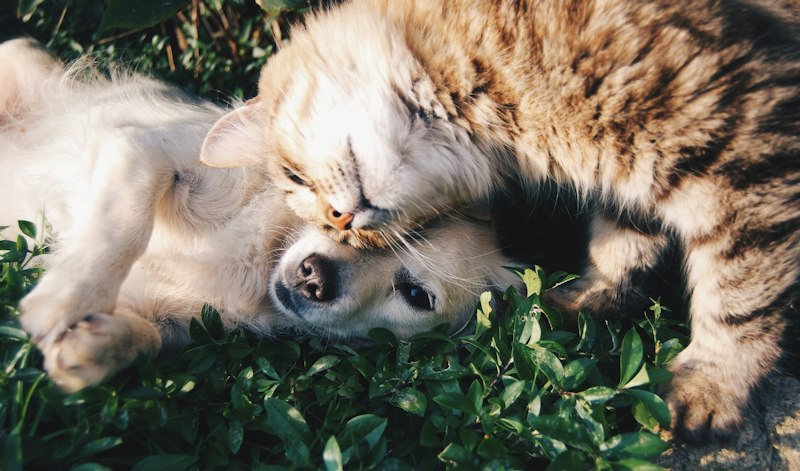
Gilnahirk sits on the rising ground above east Belfast, where the streets run out and give way to a network of quiet country lanes climbing towards the Castlereagh ridge. It's not a waymarked forest park with a car park and a map board - it's working farmland edges, hedgerows, and lanes that have been walked by locals with dogs for years without ever really being 'discovered'. That's exactly what makes it good for a puppy: enough quiet to think, but enough real-world texture - gates, gravel, the odd tractor, a dog barking behind a fence - to actually teach a young dog something.
This guide is written for the first few months with a pup, not for seasoned trail dogs. If you're searching for dog walks Gilnahirk, Belfast because you've just brought a puppy home and want somewhere close, low-traffic and genuinely useful for building confidence, this is the honest version - including the parts that are muddy, narrow, or need a lead kept on.
Why these lanes suit a first-time pup
A brand-new puppy doesn't need distance, it needs variety in short bursts. The Gilnahirk lanes give you tarmac, gravel, grass verge and muddy gateway all inside a few hundred metres, which is a far better introduction to different footing than a flat, uniform park path. Puppies that only ever walk on smooth pavement or manicured grass can be surprisingly unsettled the first time they meet loose stone or a soft, sucking gateway - better to meet that here, slowly, on a lead, than somewhere busier.
The other advantage is noise and movement at a manageable level. There's the occasional car, a farm vehicle now and again, sheep or cattle behind fences, and other dog walkers - enough real stimulus to work on calm behaviour, but nothing like the volume of traffic or crowds you'd get walking along a main Belfast road. For a pup that startles easily, that middle ground matters.
Where's a good first loop for a young pup?
Don't start at the top. The upper lanes towards the ridge are more exposed, narrower, and further from the car if things go wrong - a pup who suddenly sits down and refuses to move is a real possibility in the first few weeks. Instead, begin from the lower end near Gilnahirk Road, where the lanes are a little wider and houses aren't far behind you. A short there-and-back loop of ten to fifteen minutes is plenty for a very young pup; you can extend gradually as fitness, confidence and joints allow.
Resist the urge to chase a big scenic outing straight away. The ridge views towards the lough and the hills are genuinely worth seeing on a clear day, but they're a reward for later visits, once your dog is walking calmly on the lead and isn't spooked by a gate banging in the wind.
- First few walks: short, low stretch of lane, out and back, lead on throughout
- Once settled: extend a little further along the same route rather than choosing a whole new one
- Save the higher, more open ridge sections for once recall and lead manners are solid
What's underfoot, and how does February change it?
The lanes are mostly tarmac with grass verges, but gateways into fields are almost always the soft spot - churned by livestock and farm traffic, they hold water and turn to real mud well into spring. In February especially, expect standing puddles in the dips, slick mud at gates, and ice lingering in the shaded, hedged stretches that don't see much sun. A young pup's pads aren't used to any of this, so short exposure on lead is the aim, not a long slog through it.
The verges themselves are usually the driest and kindest surface for tender paws, and worth steering a pup onto rather than the crown of the lane. Bring a towel for the car regardless of season - even a dry-looking day here can leave four muddy feet by the time you're back.
Livestock, traffic and blind bends - the honest bit
These are working lanes, not a fenced park, and that's the one thing every owner needs to hear before they go. Fields either side are often grazed by sheep or cattle, and even a well-behaved pup should stay on the lead here - a young dog's first encounter with livestock is not something to leave to chance, and a spooked sheep near lambing time is a serious problem for everyone. There is no safe off-lead field along these lanes, so don't unclip based on hope.
Traffic is light but not absent, and several stretches are effectively single track with hedges close on both sides, so visibility on bends is poor. If you hear a vehicle or see another walker with a dog approaching on a narrow section, the easiest thing is to step into a field gateway and let them pass rather than trying to squeeze by. It sounds like a small thing but it's the difference between a calm pup and a startled one.
Where to leave the car without causing a nuisance
There isn't a formal car park for this network of lanes, so parking is a matter of common sense and courtesy. Roadside space near the bottom of Gilnahirk Road is usually the quietest and most straightforward option, and it keeps your first short puppy loops close to the car in case you need to cut things short. Avoid pulling up tight against field gates or farm entrances further up the lanes - these are used regularly by whoever farms the land, and a blocked gate is a genuine problem for them, not a minor inconvenience.
Check current signage before you park, since arrangements on quiet country lanes like these can change without much notice. If in doubt, park a little further back on a wider stretch and walk in rather than squeezing the car into a gap that might not be there next time you visit.
Building real confidence, not just miles
The value of this place for a young dog isn't the length of the walk, it's the texture of the experience. Let a nervy pup stop and look at a gate, a tractor in the distance, or a dog behind a fence rather than dragging them past it - a few seconds of watching and then moving on teaches far more than being hurried through. Reward calm, not just movement.
A long line is worth having in your pocket even if you never plan to use it fully extended - it gives a pup a bit more freedom to sniff a verge or explore a gateway without you having to unclip the lead in a place where recall genuinely can't be tested safely. If the open stretches near the top get windy and a young dog flattens or wants to turn back, that's not failure, that's information - drop down to the more sheltered, hedged lower lanes and try the higher ground again another day.
For owners juggling early puppy walks with work, this is often the exact stage where doggy day care near me searches start appearing on the phone. If you do reach that point, it's worth knowing that places like Johnny's Doggy Hotel, not far away in Newtownbreda, are used to young pups at exactly this stage - short structured time with other dogs, on top of the lane walks, rather than instead of them.