
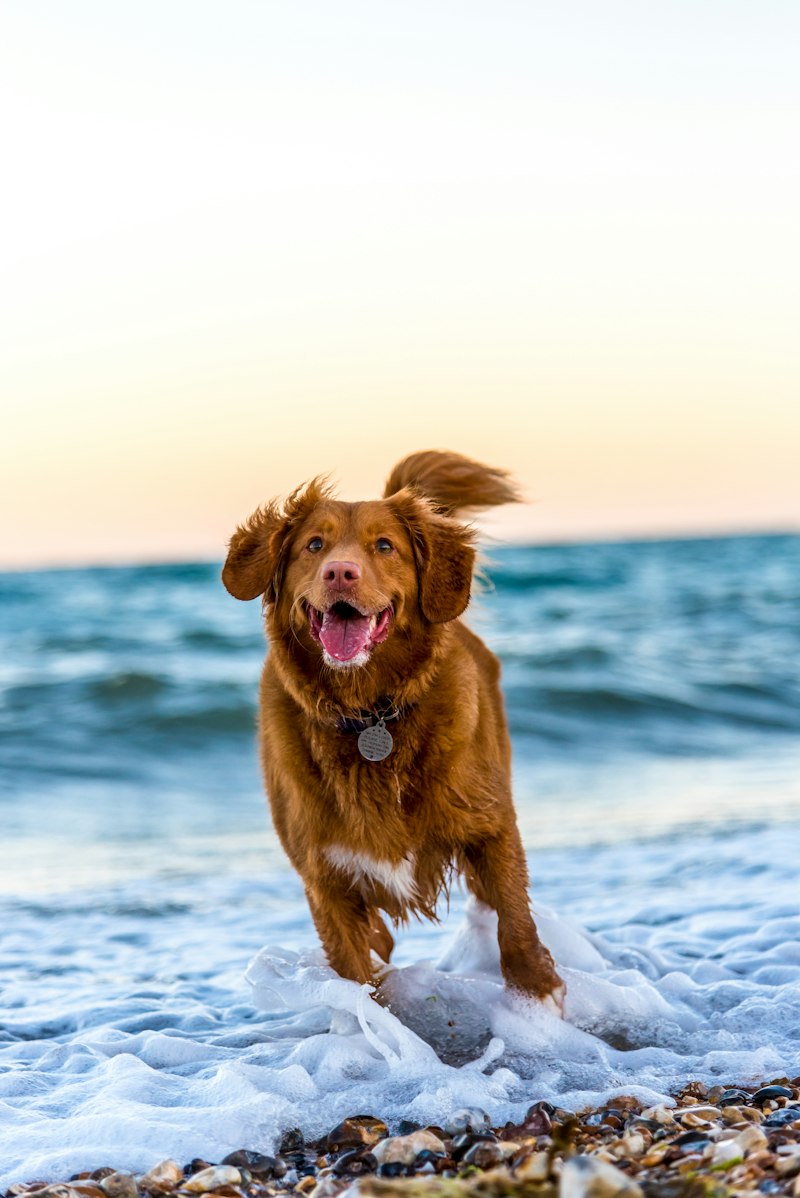
What Kinnegar and Seapark are actually like on a grey Tuesday
Holywood sits on the County Down shore of Belfast Lough, and Kinnegar is the stretch of shoreline just north of the town centre, past the yacht club, where the promenade runs alongside open playing fields and a wide expanse of tidal mud. Seapark is the green space that sits between the town and the water — part proper playing field, part scrubby verge, part the bit dogs actually use. Together they're one of the more genuinely varied dog walks near Belfast: sea air, boats, wading birds, and enough open grass for a decent run when the weather allows it.
In the wet months, from roughly October through to March, this is not a delicate, manicured park. It's a working coastal green space that takes the brunt of Irish Sea weather, and it looks it. If you've walked here before only in June, February will come as a surprise.
Where the mud actually is (and where it isn't)
The tarmac promenade along the sea wall is the reliable bit. It drains straight into the Lough, so even after a week of rain it's usually just wet rather than treacherous. That's the path most people end up sticking to once they've learned the hard way about the field.
The playing fields at Seapark are a different story. They sit low, the ground is heavy clay-ish soil underneath, and after sustained rain they pond properly — not puddles you step around, but standing water across whole sections. Dogs that love a flat-out sprint will find their paws sinking, and by January the well-used desire lines across the grass turn into strips of black mud that don't fully firm up again until spring.
There's a strip of rougher, scrubbier ground between the formal field and the shore itself, and that tends to cope slightly better because it's less compacted — but it's tussocky and uneven, so it's not somewhere to let an older dog or a puppy build up speed.
- Sea wall promenade: tarmac, drains well, wet but rarely a bog
- Main playing fields: low-lying, ponds badly, stays soft for days
- Scrubby verge nearer the shore: uneven but drains a bit better than the open field
Where to park without adding the High Street to your problems
Holywood's High Street can get properly busy, especially at school run times and on weekend mornings when everyone's heading for coffee before or after their walk. If you're coming specifically for the dog, it's usually easier to aim for the roads and informal parking down near the yacht club and Kinnegar itself rather than trying to find a space in the town centre and walking down.
There's generally somewhere to leave the car near the entrance closest to the water, but spaces fill up quickly on a dry Saturday, and on a wet weekday they can be surprisingly busy too — this is a popular dog walk near Belfast for people coming from Holywood, Cultra and further into East Belfast, not just locals. Whatever you do, check current signage before assuming anything about restrictions; it does get enforced.
Mind the mudflats — this is the bit people get wrong
The tidal mud at Kinnegar is one of the most distinctive features of the walk, and also the thing that catches dogs and owners out every year. At low tide, a huge expanse of flat, grey-brown mud is exposed, often with wading birds working across it. It looks walkable. It very often isn't. The surface can hold a bird's weight and then swallow a boot, or a dog, several inches deeper a few steps further out.
Keep dogs on the lead or under very close control anywhere near the edge of that mud, especially in winter when the ground above the tideline is already soft and the boundary between 'shore' and 'mudflat' is harder to judge. A dog that goes chasing a gull out onto the flats can get properly stuck, and pulling a frightened, mud-caked dog back off wet mud is unpleasant and occasionally genuinely dangerous, not just messy. If in doubt, stay well back and treat the whole foreshore as off-limits for running about.
A route that survives a wet week
The walk that holds up best in the wet months is the simplest one: stick to the sea wall path, use the fields only for a controlled sniff or toilet stop rather than a sprint, and treat the shoreline as a lead-on zone rather than a free-run zone once the tide is out. Doing a there-and-back along the promenade, rather than looping through the middle of the field, keeps most of the walk on solid ground and saves the worst of the mud for the last few minutes rather than the whole outing.
If your dog genuinely needs to run rather than just walk, it's worth being honest about the state of the field before you unclip the lead. A dog that's desperate for a proper off-lead blast is often better served on a drier day, or with a shorter, harder run somewhere firmer, than being let loose across standing water just because you're already there.
The kit that actually makes this bearable
Nobody who walks here regularly in winter does it in trainers. A decent pair of wellies or proper waterproof boots is the baseline, because even the 'good' path gets puddled in a downpour and the field is a write-off for anything else.
For the dog, a waterproof or muddy-friendly coat earns its keep on this walk more than almost anywhere else locally, simply because of how exposed the shoreline is to wind coming straight off the Lough. Past that, the kit that matters is less about the walk itself and more about what happens after it.
- Wellies or proper waterproof boots — trainers won't survive a wet-season visit
- A dog coat that's actually waterproof, not just showerproof, given the wind off the water
- A dedicated towel and a spare in the car, plus something old to cover the seats or boot
- A lead with a decent length for close control near the mudflats, rather than a long-line
- Poo bags — always more than you think, since the bins can be some way apart along the shore
- Hi-vis or a light on the collar, since afternoons get dark early and the promenade has limited lighting in places
When the walk just isn't going to happen
Some weeks the fields simply don't dry out, the wind off the Lough is brutal, and even the sea wall feels like hard work with a reluctant dog on the end of the lead. That's normal for this stretch of coast in winter, and it's worth accepting rather than forcing a miserable walk just for the sake of it.
If you're weighing up whether a dog actually needs to go out in that kind of weather, or you're heading away and need somewhere for your dog while you're gone, that's really a separate question from the walk itself — but it's the same reason places offering dog boarding Belfast owners can rely on, or a bit of doggy day care near me on a genuinely filthy day, tend to be busiest through the wet months. At Johnny's Doggy Hotel, over in Carryduff near Newtownbreda, that's exactly the kind of week that keeps us occupied — dogs still need to run about and be tired out even when Kinnegar is underwater.