
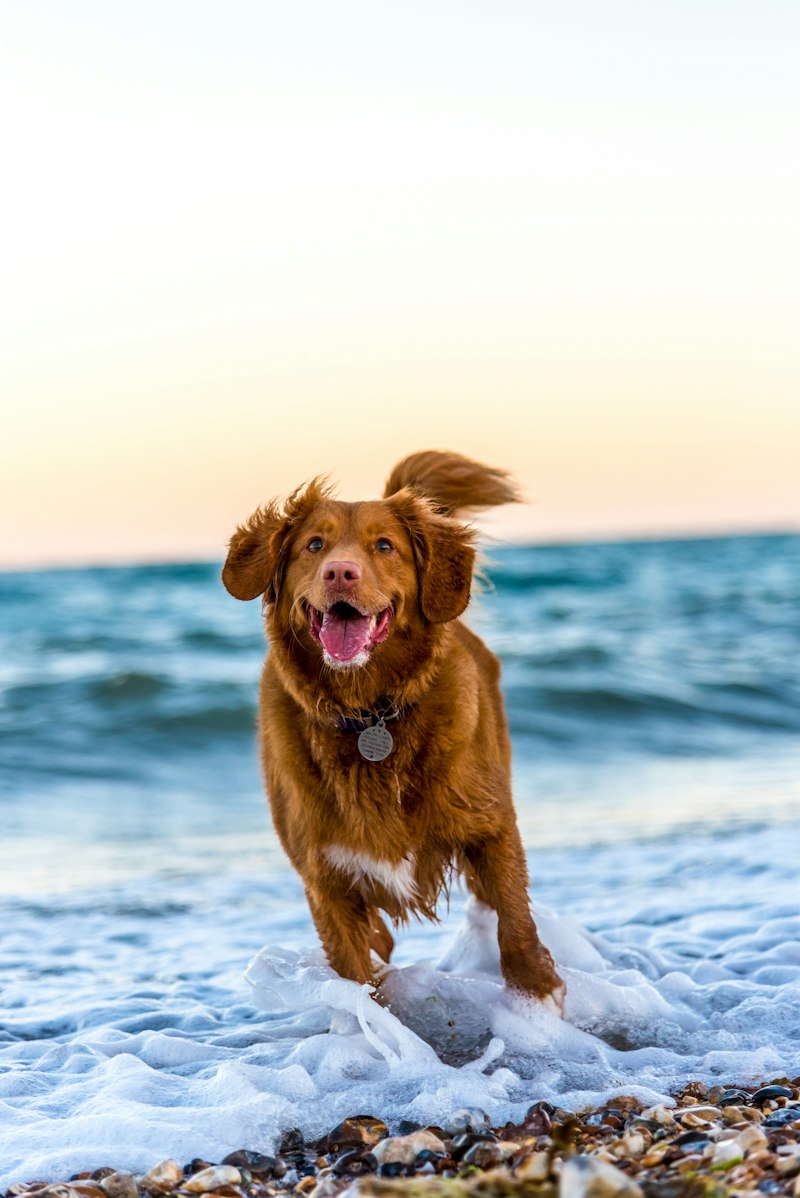
Why Redburn works for a young puppy's first real walks
Redburn Country Park sits on the hill above Holywood, with forest tracks that climb steadily towards views out over Belfast Lough. For an adult dog with four strong legs and a bit of fitness, the climb to the top is the whole point. For a puppy, it's almost the opposite: the real value of Redburn is that you can choose how much of it you do. There's enough flat, sheltered ground near the entrances to make a proper short loop without ever committing to the hill.
That matters more than people expect. A lot of advice about dog walks near Belfast assumes every dog wants the longest route with the best view. A puppy doesn't need the view. It needs new smells, a few different surfaces under its paws, the sound of other dogs at a distance, and to go home tired rather than flattened. Redburn, used properly, does all of that in twenty minutes.
Where to park and which entrance is quieter
There's usually parking near the main entrance into the park, and most people arrive this way. At busier times — weekend mornings especially, when Holywood itself is also busy with shoppers heading to the high street — this car park fills, and you can end up doing your introductions to the lead in a car park full of excitable adult dogs, which is the last thing a nervous puppy needs.
If you know Redburn already, you'll know there's a quieter way in on the Craigantlet side that locals use to dodge exactly that. It's a smaller pull-in rather than a proper car park, so don't rely on it being free, but if it is, it drops you onto the park at a point where there are fewer dogs off lead and more room to let a puppy stand and take things in before you've even started walking. Check current signage when you arrive, since access points and any restrictions do get updated from time to time.
Whichever entrance you use, give yourself a minute in the car with the engine off before you get the puppy out. Let them hear the place — other dogs barking a greeting, a car door, maybe a bike — before you add a lead and an unfamiliar path on top.
The short loop that actually suits a puppy
Forget the summit walk for now. The good puppy route at Redburn is the lower loop: stick to the ground nearest whichever entrance you've used, keep the gradient gentle, and turn back before the path starts to pitch upward seriously towards the open viewpoint. On a map this looks unambitious. On the ground, with a twelve-week-old puppy, it's plenty — new ground, a change of tree cover, maybe a glimpse of the lough through the trees, and you're back at the car before anyone's legs have given out.
Do this same short loop two or three times over a couple of weeks rather than swapping to a new place every visit. Puppies build confidence through repetition in a place that stays the same, not through constant novelty. Once a puppy is trotting out happily on the lower loop, start extending it by one junction at a time rather than jumping straight to the full circuit.
If you do want to head further, the climb towards the top of Redburn rewards patience with proper views out over Belfast and the lough on a clear day, but that's a walk for a dog with some stamina and solid joints, not a sixteen-week-old pup. Save it.
- First few visits: lower ground near the entrance only, 10–15 minutes of actual walking
- Once settled: extend by one path junction at a time, watching for tiredness
- Save the climb to the top viewpoint for when the puppy is older and fitter
What the ground is actually like underfoot
Redburn's paths are a mix: some stretches are firm compacted gravel or stone, and others are bare forest track over roots and packed earth. In decent weather this is a gift for a puppy — different textures under the paws, in a safe, controlled way, is good early conditioning for a dog that's going to encounter all sorts of surfaces over its life.
The catch is Northern Irish weather. From roughly October through to March, and especially in a wet February, the earthier sections hold water and churn up fast once a few dogs and walkers have been through. Expect genuine mud, not just damp ground, on the shaded parts of the lower loop in particular — the tree cover keeps the sun off and the path never really dries out properly in a wet spell. Bring a towel for the car and don't be surprised if a white puppy goes home a different colour.
There are also a few sections with uneven stone or exposed roots where a puppy still working out where its own feet are can stumble. It's not a dangerous path by any means, but it's not a flat park either, so keep an eye on footing rather than just scenery for the first several visits.
Building confidence around people, dogs and the odd surprise
Redburn gets a steady stream of dog walkers, runners, and families, which is exactly the kind of low-key exposure a young puppy benefits from — as long as you manage the encounters rather than let them happen to you. Step off the path and ask for a sit if a larger dog is approaching off lead and you're not sure of its manners; most owners will understand. Most dogs at Redburn are friendly and well used to passing others, but off-lead dogs appearing suddenly round a bend in the trees can still rattle a puppy that's only ever met dogs on a lead.
Keep puppies on lead until recall is genuinely reliable, not just reliable in the back garden. Redburn backs onto farmland in places, there's traffic on the roads bordering the park, and a spooked puppy that's never had real distance recall tested can cover ground fast. A long training line is a reasonable halfway step once basic lead walking is solid.
Expect the unexpected too — a pheasant breaking cover, a cyclist appearing quietly from behind, a sudden burst of birdsong overhead. None of it is a problem if you treat it calmly and let the puppy look, sniff, and decide for itself that it's nothing to worry about. Dragging a puppy past something it wants to investigate teaches it that new things should be feared, not ignored.
Knowing when the walk is over
Puppies don't pace themselves. A pup that's wildly keen at the car park can be running on empty twenty minutes later without showing the obvious signs an adult dog would. Watch for lagging behind rather than trotting ahead, sitting down on the path for no clear reason, losing interest in treats, or a change in gait. Any of those means turn around now, not after one more loop.
It's worth planning routes at Redburn with this in mind from the start — know your shortest way back to the car before you set off, so that if a puppy does flag halfway round, you're not stuck choosing between a long walk back or an even longer one forward. Carrying a small or medium puppy the last stretch isn't a failure, it's good judgement.
If you're finding that every walk ends in a flat puppy and you're not sure you're pitching the exercise right, that's a completely normal thing to ask a vet or a reputable local trainer about — growth plates and exercise limits vary a lot by breed and size, and general advice online won't account for your specific dog.
If you're planning ahead for boarding or day care
A puppy that's been introduced gradually to places like Redburn — new ground, other dogs at a sensible distance, a bit of mud, a bit of weather — tends to settle faster when the time comes for doggy day care or an overnight stay away from home. If you're in or around Carryduff, Newtownbreda or further into Belfast and thinking ahead to dog boarding, it's worth mentioning to whoever looks after your dog how they've coped with new environments on walks like this one, since it helps shape how their first stay is handled. We hear this from families at Johnny's Doggy Hotel fairly often — the puppies who've had a few proper walks in mixed, slightly unpredictable terrain generally find kennel life and day care easier than those who've only ever walked the same flat street.