
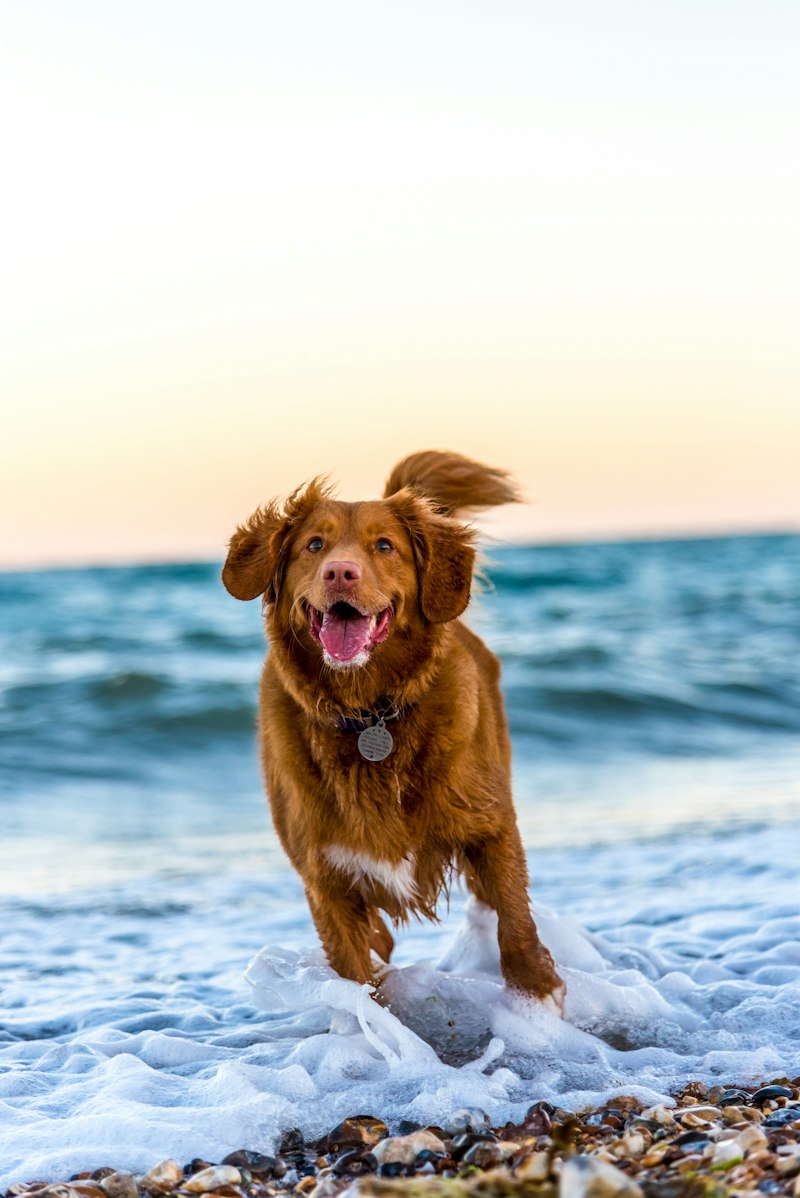
Why Portstewart Strand Earns Its Reputation, Even in the Rain
Portstewart Strand sits on the North Coast in County Londonderry, a long, open stretch of sand backed by a substantial dune system, with the town of Portstewart at one end and the mouth of the River Bann at the other. It's a proper drive from Belfast and County Down rather than a nip out at lunchtime, which is exactly why people ask about it when they're planning a day trip rather than a daily loop. In good weather it's one of the best dog walks in Northern Ireland, full stop. In the wet months it's a different animal, and it's worth knowing what you're walking into before you load the dog into the car.
From November through to March you can expect low cloud rolling in off the Atlantic, sea fret that sits on the coast for hours, and wind that comes straight across the sand with nothing to break it. None of that makes the beach unwalkable — if anything, an empty, blustery Portstewart Strand in February with nobody else on it is one of the better dog walks in County Londonderry, or anywhere on this coast. But the ground underfoot, and the state of the dog by the time you're back at the car, need managing.
What the Sand Actually Turns Into By January
The main beach itself is generally forgiving. It's a working strand — firm, flat sand that drains quickly, so even after a wet week the section closest to the tideline is usually walkable without turning into a bog. Where it gets harder work is the softer, drier sand up near the dune line, which holds water in patches and can be genuinely tiring for an older dog or a small one to push through when it's saturated.
The real mud is in the transition zones: the access paths down through the dunes, the marram grass margins, and especially the machair grassland behind the beach, where standing water and soft, peaty ground are normal for long stretches of winter. If you've walked a dog through Castlewellan or the Lagan Valley in a wet spell, picture that consistency, then add salt and sand grit to the mix — it works its way into paws and coats in a way that inland mud doesn't.
The Bar Mouth end, where the beach meets the Bann estuary, is worth naming separately. It's a lovely stretch for a dog that likes to potter along a tideline, but the ground there is softer and more variable, with channels and wet sand that don't always look as soft as they are. Take it slower than the main beach and keep an eye on where the dog is putting its feet.
Where to Park Without Adding to the Walk
The main car park at Portstewart Strand, run by the National Trust, is the obvious starting point and gives direct access onto the beach. In the wet months it's noticeably quieter than a summer weekend, which suits a dog that finds busy beaches stressful, but the car park surface itself can get puddled and rutted after heavy rain, so it's worth a bit of care getting the dog in and out of the boot.
There's usually a charge for parking if you're not a National Trust member — check current signage or the National Trust's own information before you go, since we'd rather not guess at a figure that changes. If the main car park feels busy or you fancy starting from the quieter end, walking in from the Portstewart town side and picking up the beach that way is an option worth considering, though it does mean more road walking before the lead comes off.
The Kit That Actually Makes the Wet Months Bearable
None of this is complicated, but the difference between a good day at Portstewart Strand in the rain and a genuinely miserable one usually comes down to what's sitting in the boot before you leave the house.
A few things are worth having every single time, not just when the forecast looks bad:
- A large, absorbent towel — or two, if there's more than one dog — kept separate from anything else in the car
- A drybag or a couple of old feed sacks to put a properly soaked, sandy dog into for the drive home
- A boot liner or old duvet cover, because sand and salt water get everywhere a wet dog shakes
- A change of footwear for yourself; the dune paths and the machair are not a place for trainers in January
- A spare lead and a slip lead as backup, since wet leather leads and cold hands don't mix well
- A torch if you're walking anywhere near dusk, which comes early on the North Coast in winter
Lead or Off Lead? What the Dunes Actually Demand
The open beach at low tide is where most dogs get their off-lead run, and it's a genuinely good stretch for it — long sightlines, firm sand, and enough space to let a dog burn off energy properly. The dunes and machair behind the beach are a different matter. This is grazing and nesting ground, and seasonal restrictions on dogs, particularly around ground-nesting birds in spring and summer, are common on this coast. Even in the wet months, with grazing livestock possibly present, it's worth keeping the dog on a lead once you're off the open sand and into the dune system, and checking the current signage at the entrance rather than assuming last year's rules still stand.
This is also where recall matters most. A dog that's brilliant on an empty beach can still bolt after a rabbit into the marram grass, and the ground in there is uneven, wet, and not somewhere you want to be chasing a dog at speed.
Getting the Mud and Salt Off Before You Drive Home
There isn't a reliable substitute for doing this yourself in the car park. A quick check of paws and belly for sand, grit, and any cuts from shells or debris washed up along the tideline is worth the two minutes it takes, especially after a walk down at Bar Mouth where the ground is less predictable. Salt water dries out paw pads over a few repeated visits, so a rinse with plain water if you've brought some, followed by a proper towel-down, keeps things comfortable for the drive back down towards Belfast.
If the dog has been properly through the machair mud, expect it to take a while to fully dry out even with a good towel, and be prepared for a smell that lingers in the car for the rest of the day. It's not a reason to avoid the walk — it's just the honest cost of a really good one.
Making a Day of It From Belfast and County Down
Portstewart Strand isn't a walk you fit around the school run. Most owners coming from Belfast, Carryduff, or further round County Down treat it as a proper day out — the walk itself, plus a stop in Portstewart or a look at the Bann estuary, rather than a quick there-and-back. If that means a long day for the dog and you're weighing it up against a spell of doggy day care near me searches instead, or you've got a trip planned to the North Coast and need somewhere trusted for the dog while you're away, that's exactly the kind of gap that dog boarding Belfast options like ours at Johnny's Doggy Hotel are there for — not every good walk has to happen on the same day as everything else.