
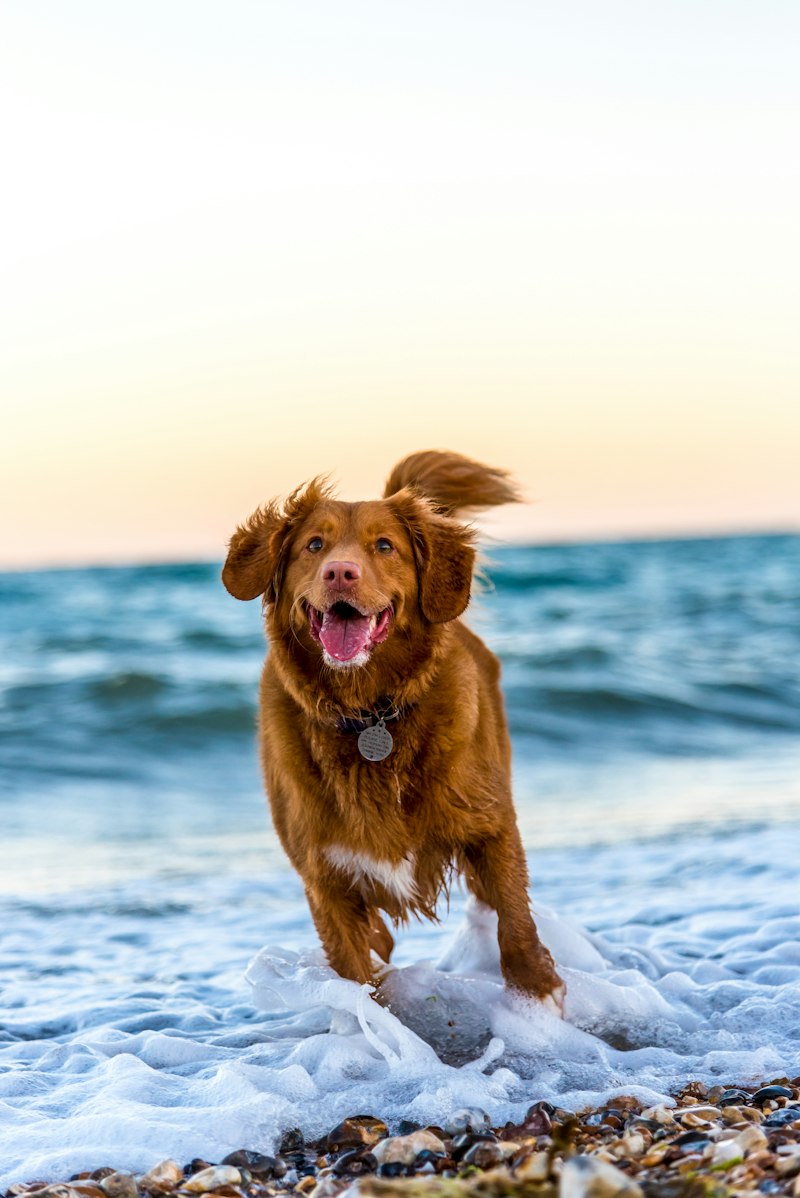
Why Castlewellan is a good place to start a puppy
Castlewellan Forest Park sits right on the edge of Castlewellan town in County Down, with the lake, the arboretum, the walled garden and the Peace Maze all inside the one boundary. For an adult dog with stamina it's a proper day out. For a puppy it's something better: a place with one long, mostly flat, mostly hard-surfaced path around the lake that lets you walk as little or as much as you like without ever being far from the car.
That matters more than people expect with a young dog. A puppy's first few outings away from home are less about exercise and more about exposure — new smells, new dogs, water glinting through trees, a peacock somewhere in the walled garden grounds calling unexpectedly. Castlewellan gives you all of that in small, manageable doses, which is exactly what you want before you ever attempt a longer dog walk near Belfast.
Where to park at the main gate (and the quieter option)
The main entrance is off the main road through Castlewellan town itself, and it's the one most visitors use, so on a fine Saturday afternoon it can feel busy with cars, families and other dogs all arriving at once — not ideal for a puppy's first outing if noise and crowding worry them.
There's also an entrance on the far side of the park, nearer the lake, that tends to see fewer cars. It's a longer walk in from the road if you're on foot, but if you're driving it can be worth using as a calmer starting point, letting your puppy get out of the car into something closer to open parkland than a car park full of activity. Whichever gate you use, check current signage on arrival — layouts and access points do get adjusted from time to time, and it's worth a glance before you commit to a route.
Which surfaces are actually kind to a puppy's paws
The path that circles the lake is largely tarmac or firm, well-maintained hardcore — the sort of surface used by walkers, runners and buggies, so it's flat, predictable and easy on joints that are still developing. This is where I'd take any puppy under about six months for their first handful of visits.
Move off that path into the wider forest and arboretum trails and the ground changes fast. There are tree roots, loose stones, packed earth that turns to soup after rain, and the odd short, steeper pull where the path climbs. None of that is dangerous for an adult dog, but for a puppy still learning to place its feet, a slick root or a hidden dip is exactly the sort of thing that causes an awkward stumble. Save the forest trails for once your dog is confident and has a bit more coordination.
How long should a first loop actually be?
Ignore the idea that you have to complete the lake loop. Walk from your gate to a landmark you can see — a bend in the path, a bench, the point where the trees open out towards the water — and turn back. That's the whole walk. A puppy's tank is small, both physically and in terms of attention, and a walk that ends while they're still curious is worth ten walks that end with them lagging and being half-carried back to the car.
Over successive visits, extend that landmark a little further out each time rather than aiming for a set distance. Some days, especially after a growth spurt or a bad night's sleep, your puppy will simply have less in them, and that's fine — this is meant to be confidence-building, not training for a route march.
- First few visits: short there-and-back sections of the lake path only
- Turn for home while your puppy is still interested, not when they've flagged
- Let sniffing count as exercise — a slow, sniff-heavy ten minutes tires a puppy's brain as much as a brisk twenty tires their legs
What the ground is actually like in a Belfast winter
County Down doesn't do dramatic weather most of the time, but it does do relentless, and Castlewellan's forest floor shows it. From roughly late autumn through to spring, the shaded trails under the trees stay wet for days after rain has stopped, and low winter light means some stretches never really dry out. Puddles that look shallow are often deeper than they seem, and mud on the sloped sections can be genuinely slippery.
The lake path copes far better — it drains and is walked enough to stay firm even in a wet spell — which is another reason to favour it with a puppy in winter. If you do wander onto the forest trails on a soft day, expect muddy paws, a filthy lead, and possibly a dog that decides the puddle is more interesting than the walk. A towel in the car isn't optional between November and March.
Lead rules, the lake wildlife and the maze crowds
Castlewellan is genuinely dog friendly, but it's also a working park with wildfowl on the lake, families using the Peace Maze, and other dog walkers with dogs of every temperament. Current signage on site will tell you where leads are required — always check this rather than relying on memory or on what a previous visit told you, since arrangements can change.
For a puppy specifically, I'd keep them on lead near the water's edge regardless of the official rule, simply because a sudden dash towards ducks or geese is a hard thing to recall in a dog with no training history yet. The same goes near the Peace Maze entrance on a busy day — lots of children, lots of movement, lots for a young dog to misread. A puppy that's a little overwhelmed by that on lead is far easier to manage than one loose and unsure what to do with itself.
After the walk: settling a tired puppy
A good short walk at Castlewellan tends to produce a properly sleepy puppy for the rest of the day, which is often the real goal in these early weeks — tiring the brain, not just the legs. If you're travelling in from Belfast, Carryduff or further round County Down, it's worth timing the drive home for right after the walk, since a car journey straight after a new experience often finishes the job nicely.
If you're ever weighing up dog boarding Belfast or doggy day care near me for a future trip, it's worth knowing that puppies who've had positive, low-key outings like this tend to settle into new environments — including a boarding stay — with far less fuss. We see it regularly at Johnny's Doggy Hotel: the pups who've had gentle, varied exposure to new places from early on are simply easier houseguests later on.