
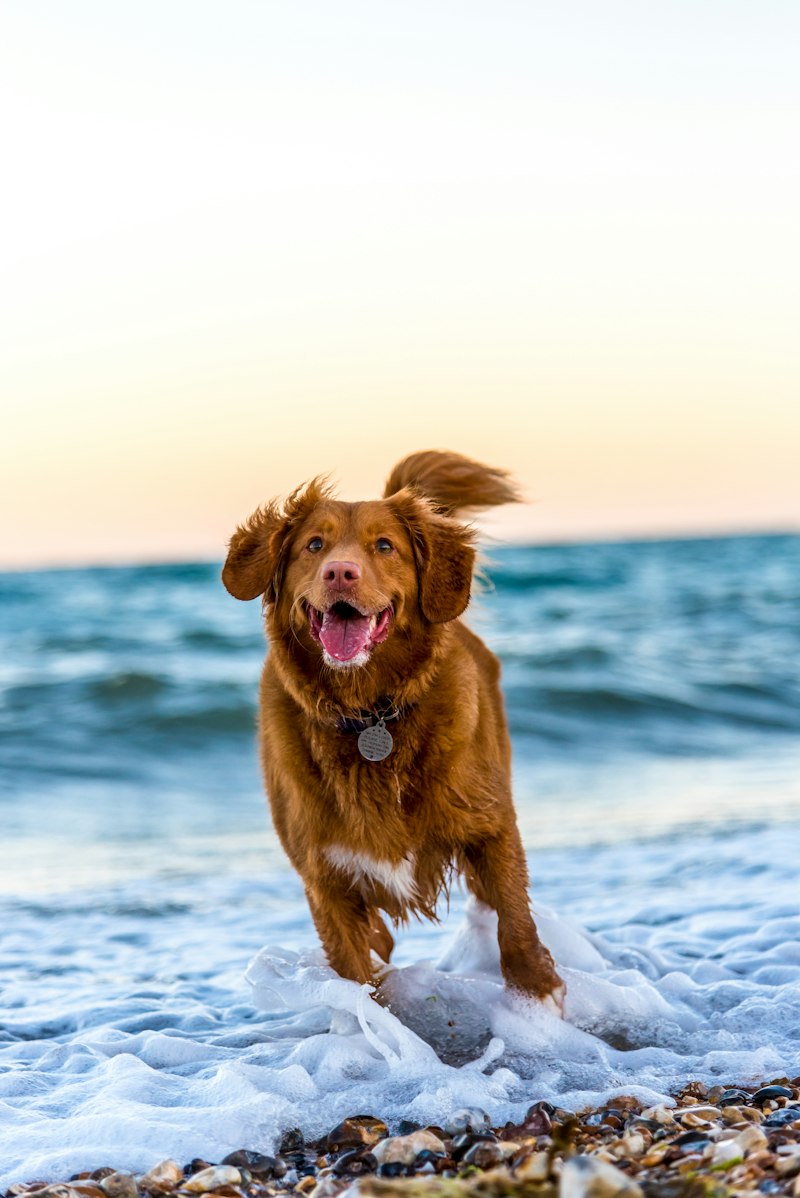
Portaferry is one of the best days out you can give a dog — with real water to respect
Portaferry sits at the tip of the Ards Peninsula, looking straight across the narrows of Strangford Lough to Strangford village, with the ferry running back and forth between the two. It's an easy run from Belfast down the A20, and for a dog owner it offers something the city parks around Belfast don't: open water, a working harbour, mudflats full of birds, and a proper sense of being at the edge of somewhere. That's exactly why it needs a bit more thought than a lap of Barnett Demesne or Cherryvale.
The angle that matters here is water. Strangford Lough is not one uniform stretch of gentle shoreline — it's a mix of a genuinely dangerous tidal narrows right at Portaferry, vast soft mudflats that are a magnet for birds and a trap for dogs, and calmer sandy bays further round the peninsula where a swim is actually sensible. Knowing which bit you're standing on matters more than anything else in this guide.
Where to park and which end is quieter
Most people arrive into Portaferry via the square near the ferry terminal, where there is usually parking within a short walk of the harbour and the shore path. It's the busiest spot in the village, especially around ferry sailings, so if your dog is nervous of engine noise or a queue of cars idling for the crossing, it's worth walking away from the slip fairly quickly rather than lingering there.
The quieter approach is to park a little further back from the harbour and come onto the shore path from the town side, away from the ferry queue. In summer, the A20 down through the peninsula and the village itself can get busy with day-trippers and people heading for the ferry; outside the summer season and off peak times it's a different, much quieter place, and a far more relaxed walk for a dog that doesn't love crowds or traffic noise.
The shore path through the village: lead on, eyes on the slipway
The path along the Portaferry shorefront gives a dog a good sniff of harbour life — boats, ropes, gulls, the smell of the lough — without needing to go anywhere near open water. This stretch is best walked on lead. There's a working slipway and ferry ramp here, boat trailers reversing, and locals going about harbour business, none of which mixes well with a dog running loose, however friendly.
It's also worth keeping a dog back from the slipway edge itself. The stone and concrete can be slick with algae and spray, and the drop into the water at the harbour wall is often deeper and colder than it looks. This is not a spot for letting a dog dip a paw, however tempting the water looks on a still day.
Why the Narrows at Portaferry are not for swimming, full stop
The stretch of water directly in front of Portaferry, between the village and Strangford, is known as the Narrows, and it carries one of the strongest tidal flows on this coast. This is exactly why the ferry has always run here rather than a bridge, and why the current has been used for tidal energy trials in the past — it's not folklore, it's a genuinely powerful body of moving water that changes with the tide, not something a dog (or a person) can read at a glance.
However calm the surface looks on a bright afternoon, a dog swimming out even a short way here can be swept by a current far stronger than its own paddling. This is the single most important safety call in this whole guide: whatever else you do at Portaferry, don't let a dog swim in the Narrows itself, near the ferry crossing or the harbour.
The mudflats and the birds: why a dog off the path can end up stuck
Strangford Lough is one of the most important wildfowl and wader sites in these islands, and a lot of the shoreline around the peninsula, including ground near Castle Espie further up the lough and the grounds at Mount Stewart near Greyabbey, exists specifically to protect that. Dogs should stay on lead near these reserves and wherever birds are feeding on exposed mud or grazing marsh, not just in winter when the numbers are highest, but as a general rule along this shore.
The practical hazard, separate from disturbing the birds, is the mud itself. At low tide the lough exposes huge flats that look like firm sand from the path but can be soft and sucking underneath, especially near channels and gutters where the tide runs out last. A dog that goes off after a curlew or an oystercatcher can get bogged down quickly, and the tide on this lough comes back in over flat ground faster than most people expect. If in doubt, stay on the made path and keep the dog with you.
Where a dog actually can swim safely
The lough shore right at Portaferry is not the place for a swim, but it isn't the whole story of the peninsula. Round towards the open sea side, spots like Kearney and Knockinelder offer a proper sandy beach with a different character altogether — more exposed to wind and weather, but without the tidal race of the Narrows. Even there, treat it like any open coastline: check the state of the tide and the wind before letting a dog swim any distance, and be aware that rocks and currents can vary from one visit to the next.
Ballyquintin Point, at the southern tip past Portaferry, is another stretch worth knowing about for a good walk with the dog on a long lead, more for the walking and the views than for swimming. As a general rule on this coast: the calmer, sandier, open-sea bays are the better bet for a swim, and the lough shore itself is better treated as a walking and sniffing route than a paddling pool.
What the ground and the weather actually do here through the year
In February and through the winter, expect the shore path and any grass verges to be properly wet underfoot, with standing water in the low spots and a cold wind coming straight off the lough that catches you as soon as you're out of the village streets. This isn't a sheltered woodland walk like Cairn Wood or Minnowburn — it's an exposed coastal one, and a wet, wind-chilled dog needs a proper towel-off and a warm car for the run home.
Summer brings the opposite problem: warm still days, midday sun with very little shade along most of the shore, and a lot more people and traffic through the village and down the A20, particularly around ferry times. An early or late walk avoids both the heat and the crowds, and gives a dog a much calmer version of the same stretch of coast.
Knowing when to call it a day
A long walk round Portaferry and the lough shore, with a proper swim at somewhere like Kearney thrown in, is a genuinely tiring day for a dog — more tiring than it looks, because sea swimming and soft sand work muscles a park walk never touches. Salt water and sand left in a coat or between paw pads can cause irritation over the following day or two, so a rinse and a good dry before the drive home is worth the effort.
If you're planning a day like this as part of a longer trip to County Down, or you need somewhere for the dog while you're away doing the same walk without them, it's worth sorting doggy day care near me or dog boarding Belfast in good time rather than at the last minute — places like Johnny's Doggy Hotel in south Belfast get booked up around school holidays and summer weekends, same as the Portaferry ferry queue.