
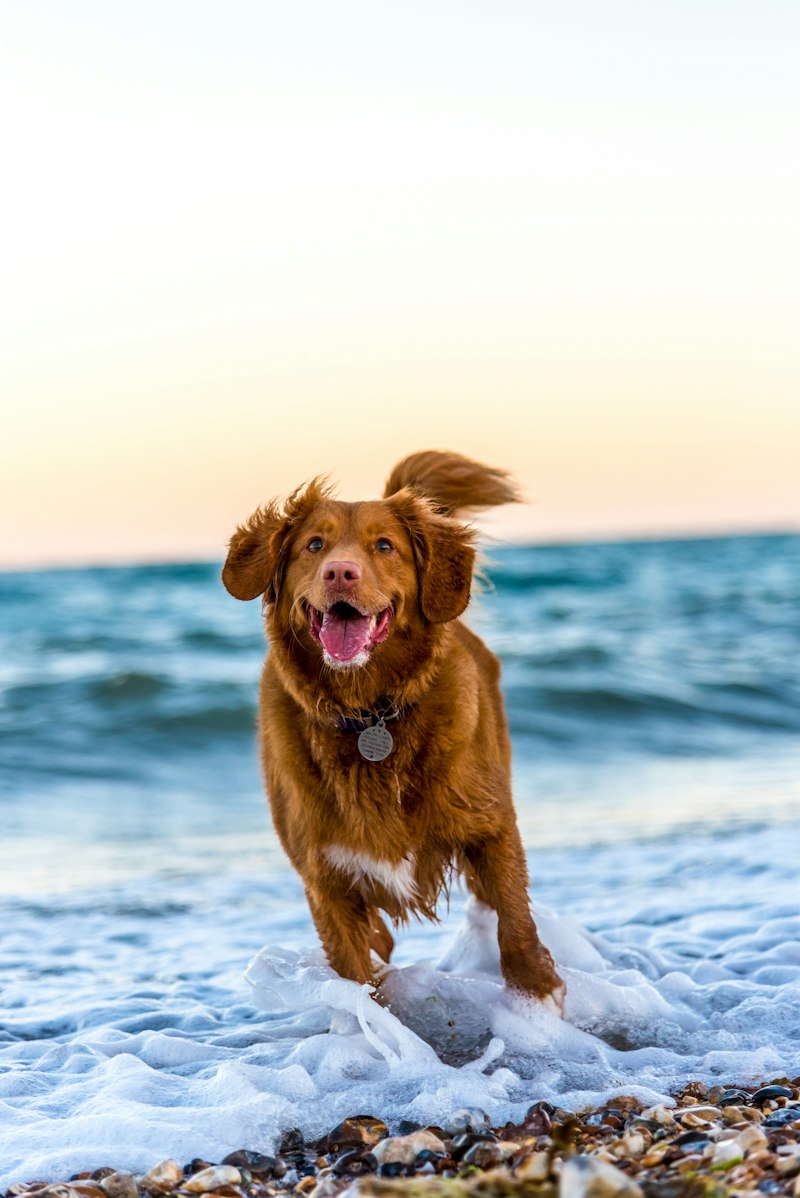
What the Lough shore path is actually like once the rain sets in
Portaferry in summer is a different place to Portaferry in February. The view across the Narrows to Strangford is the same, the seals are usually still bobbing about near the ferry slip, but the ground underfoot changes completely. The Lough shore path and the quieter lanes around the village sit low relative to the water, and after a few days of proper County Down rain — which is most of autumn and winter — the path doesn't just get soft, it holds water. You'll meet genuine puddles, not damp patches, in the same two or three spots every time, because that's where the drainage simply can't keep up.
None of this makes the walk not worth doing. It's one of the better dog walks near Belfast if you're prepared to drive out, and most dogs couldn't care less about mud. It just means the walk you do in July, in trainers, with a dry dog at the end of it, is not the walk you'll do in December.
Where to park without blocking the ferry queue
Portaferry is a working ferry town, not a car park with a village attached, so it pays to think about where you leave the car. The area right at the ferry slip is busy with vehicles loading and unloading on a schedule, and it's not the place to linger with a dog on a lead while you sort out boots and leads. There's generally parking to be found a short walk back from the water, around the village itself, and from there you can walk down towards the shore at your own pace rather than untangling a dog beside a line of cars waiting to board.
If the village feels busy — a Saturday with decent weather will do it — it's often calmer to park a little further out and walk in, rather than fighting for a space right on the front. Check current signage when you arrive, because restrictions and resident parking do change from time to time and it's not something worth guessing at.
How bad does the mud actually get?
Bad enough that it's worth being honest about it. The low-lying sections of the Lough shore path, and the field edges and farm lanes that link up some of the walking around the peninsula, sit on heavy clay-ish ground that doesn't drain quickly. After a wet spell it turns to the kind of mud that pulls a boot off rather than just coating it — sticky, deep in the ruts, and often hiding a puddle underneath rather than beside it. Gateways and stiles are usually the worst of it, simply because every walker and every animal funnels through the same narrow gap.
The drier ground tends to be along the higher sections nearer the village and on any stretch that's been recently resurfaced or gravelled — ask locally or watch for it on the day, since this isn't consistent along the whole route. A dog that pulls on the lead through a gateway in January will come out noticeably heavier and browner than the dog that went in.
- Low stretches near the shore hold standing water for days after rain
- Gateways, stiles and field entrances are usually the worst mud, not the open path
- Higher ground nearer the village generally drains faster
The kit that actually earns its place in the car
You don't need to go overboard, but a few things make the difference between a miserable slog and a decent winter walk. A lead that can take a soaking and still work properly matters more than a smart one — leather leads that have gone stiff with repeated wet-dry cycles are a nuisance exactly when you need them most. A long-line is genuinely useful on the open stretches where you want a dog to range a bit without being properly off lead near livestock or the water's edge.
Boots or a decent grippy sole for yourself are not optional once the clay gets slick, particularly on any slope down towards the shore. For the dog, a towel that lives permanently in the boot of the car, rather than one you remember halfway home, saves the upholstery and your temper in equal measure. A coat that actually sheds water rather than soaking it up is worth it for short-coated or older dogs who feel the cold off the Lough — there's very little shelter along most of the shore path, and the wind off the water on a wet day can be sharper than the forecast suggests.
- A wet-weather lead and a long-line for open stretches
- Grippy boots for you — the clay gets properly slick on slopes
- A dedicated car towel, used before the dog gets near the seats
- A water-shedding coat for short-coated or older dogs
Is it safe to let a dog off lead near the Narrows?
This is worth being blunt about. The stretch of water between Portaferry and Strangford, known locally as the Narrows, has a strong tidal current running through it — it's one of the reasons the ferry runs the route it does rather than a straight line across. It is not a place for a dog to go for a swim, however tempting the water looks on a calm day, and it's not somewhere to assume a confident swimmer will simply paddle back to shore if they go in. Keep dogs on lead or on a long-line on any section close to the water's edge near the ferry crossing, and be especially careful if you're walking with a dog that chases gulls or waterfowl without checking where its feet are going first.
Away from the Narrows itself, along the quieter shore path, the water is generally calmer and shallower, but tides still move a lot of ground on Strangford Lough, and mudflats that look solid at low tide are not always what they seem. If in doubt, keep the dog back from the edge rather than testing it.
What actually wrecks a wet-weather walk here
It's rarely the rain itself that ruins the day — it's the things nobody planned for. Livestock in the fields bordering some of the farm lanes catch people out, especially with a dog that's normally fine off lead at home; this is sheep country, and a dog chasing a ewe through a muddy field in February is a bad afternoon for everyone involved, so lead on around any field with animals in it, no exceptions. The other common mistake is underestimating how exposed the shore path is — there's very little tree cover, so a day that looks merely grey from the car can turn into a proper soaking with wind-driven rain once you're a good way along and committed to the walk.
Light is the third thing people forget about in the darker months. An afternoon walk that felt perfectly timed in October can end in near-dark by the time you're back at the car in December, and the path isn't lit. A head torch costs nothing to keep in the glovebox and saves a slow, careful walk back over uneven, muddy ground.
Getting a soaked, muddy dog home afterwards
If you've driven down from Belfast, Carryduff or anywhere else in the greater area for the day, it's worth building in proper drying-off time before the drive back rather than bundling a soaked dog straight into a warm car — steamed-up windows and a dog that smells of wet Lough mud for the whole journey home is not a great way to end a nice walk. A quick towel-down at the car, a chance to shake off, and the windows cracked for the first few minutes all help.
For owners who are based further out and want to make a full day of the Ards Peninsula without rushing the dog home afterwards, it's also worth thinking ahead about where the dog goes if you've a long day planned, a ferry crossing on top, or an early start. This is exactly the kind of day that owners from Carryduff, Newtownbreda and across south Belfast sometimes plan around a stay at somewhere like Johnny's Doggy Hotel — either dropping the dog in beforehand for the day or arranging an overnight either side of a longer trip around the peninsula, rather than trying to manage a tired, filthy dog on top of a long drive home.