
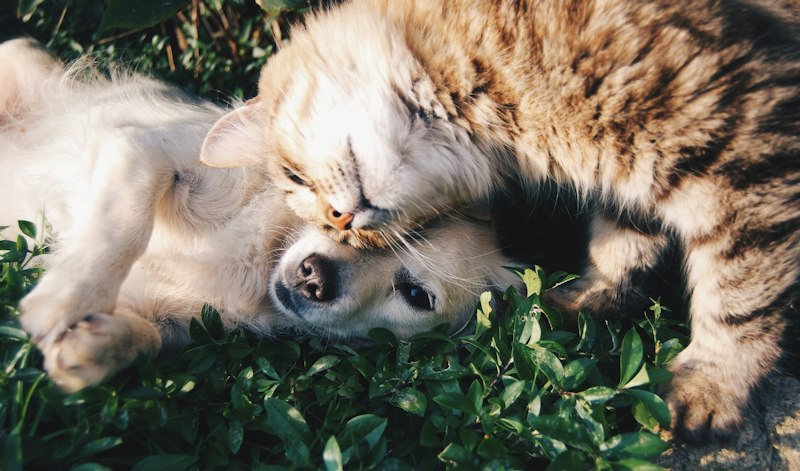
What Crawfordsburn is like once the rain sets in
Crawfordsburn Country Park, just outside Helen's Bay in County Down, is one of the better-loved dog walks within easy reach of Belfast, and for good reason — a wooded glen with a running river, a waterfall, and a sandy beach at the far end, all stitched together by paths that feel properly rural despite being a short run from the city. For about half the year it is genuinely lovely underfoot. For the other half, roughly October through to March, it is a different place entirely.
Anyone who has typed something like dog walks Helen's Bay, County Down into their phone on a grey Tuesday afternoon already knows the park by reputation. What they usually haven't been told is that the same glen that looks postcard-pretty in a June photo becomes a genuine test of footwear, patience, and your dog's tolerance for being hosed down afterwards. This is the honest version — what the ground actually does, where the water collects, and what to bring so the walk is still worth doing.
Which entrance should you use in winter?
There are a couple of ways into the park, broadly from the Bridge Road side near Crawfordsburn village and from the Helen's Bay end nearer the railway station and the beach. In the wetter months the Bridge Road entrance tends to be the quieter option if you want the glen and waterfall without much company, since a lot of casual visitors gravitate straight to the beach car park when the forecast is poor and stay close to it.
The road down from the main Bangor to Belfast direction can carry a fair bit of commuter traffic at the usual times of day, so if you're coming from Belfast it's worth avoiding the tail end of the working day if you can. Parking fills up fastest on dry weekends, and empties out almost entirely on a filthy February weekday — which, if you don't mind the conditions, is actually the best time to have the glen largely to yourself.
Check the current signage at whichever entrance you use. Gates, barriers, and any seasonal access changes do shift from time to time, and it's a five-second glance that saves a wasted trip.
What does the ground actually do underfoot?
The glen path running alongside the Crawfordsburn river is the heart of this walk, and it's also where the wet months do their worst. The surface is a mix of packed earth, tree roots, and stone, and after a few days of rain the earth sections turn to a dark, sucking mud that doesn't just sit on top of your boots — it works its way up past the ankle if you're not careful where you put your feet. Tree roots that are barely noticeable in summer become genuinely slick, and the steps in places get a greasy film that catches dogs and owners alike.
Drainage through the glen is reasonable in the drier stretches but struggles where the path narrows close to the river itself; after sustained rain you'll find standing water sitting across the path rather than running off it, which means either a detour onto the verge (more mud) or accepting wet feet. The little bridges and stepping-stone crossings over the river are usually fine, but after heavy rain the water underneath them rises and moves a lot faster than it looks, so this is not the spot to let an adventurous dog off lead for a paddle.
The waterfall itself is more dramatic after rain, which is one of the genuine upsides of walking here in winter — it's a proper, noisy drop rather than the gentle trickle you get in a dry August. Just be aware the viewing area and the paths around it get slippery underfoot for the same reasons as everywhere else.
- Soft, deep mud on the earth sections of the glen path after rain
- Standing water across the path near the river in sustained wet weather
- Slick roots and greasy steps, especially on shaded, north-facing stretches
- Faster, higher river flow after rain — keep dogs on lead near the water
Is the beach any better than the glen?
The beach at Helen's Bay is a reasonable escape from the worst of the glen mud, since sand drains far better than woodland earth and a wet beach is generally a cleaner walk than a wet glen. It's a popular, dog-friendly stretch, and plenty of local owners treat it as the main event rather than a bonus at the end.
The caveat is the tide. At high water there's a lot less dry sand to work with, and the walk can feel squeezed between the water and the dunes or rocks depending on exactly where you are. It's worth getting a rough idea of the tide times before you set off if the beach is the main part of your plan, rather than discovering halfway along that you're walking a narrow strip with a boisterous dog and a pram coming the other way.
The path connecting the glen to the beach crosses under or near the railway line, and that stretch can hold water and mud just as readily as the glen does, so don't assume the beach section means you can leave the boots in the car.
What kit actually makes the difference?
None of this needs to be complicated, but a few things genuinely change how miserable or manageable the walk is. A lead with a secure clip matters more here than on a flat park loop, simply because the river is close, fast after rain, and tempting to a dog who doesn't know better. A long line is lovely on a dry summer evening in the open field areas but is the wrong tool for the glen itself in winter — too easy to lose grip of, too easy to tangle round a root in the mud.
For the dog, a decent waterproof coat earns its keep on a short-legged or thin-coated breed that otherwise comes out the far end soaked through and shivering. For yourself, proper grip matters more than waterproofing — a pair of wellies or walking boots with real tread will keep you upright on the greasy steps in a way that a smart waterproof jacket never will.
Bring more than you think you need in the way of towels. An old towel for the dog, a second one for yourself if you go over on a slippery bit, and something to put down in the car boot that you don't mind ruining. A head torch earns its place too, since the darker months mean a lot of this walk happens in failing light, and the uneven glen path is not somewhere you want to be relying on a phone torch held in your teeth.
- Secure, non-retractable lead for the river sections
- Waterproof dog coat for thin-coated or short-legged breeds
- Grippy boots or wellies rather than trainers
- Old towels — plural — and a ruined-already car liner
- Head torch for the darker afternoons
What goes wrong — the honest bits
The most common issue isn't the mud itself, it's underestimating it. People arrive expecting a pleasant woodland stroll and end up with a dog that's black to the shoulder and a pair of trainers that are finished for good. The second most common issue is dogs going into the river after a stick or a scent and coming out faster and colder than their owner expected — the current really does pick up noticeably after a wet week, even on a stretch that looks gentle.
On busier dry days you'll also meet horses, cyclists, and families with small children sharing the same paths, so recall matters here as much as footing does. In the wet months that traffic drops off a lot, which is pleasant, but it also means fewer people about if something does go wrong — worth bearing in mind if you're walking alone with a dog who's new to you or still finding their feet on lead.
If your dog genuinely hates being wet and muddy, or you simply don't have the stomach for the clean-up most weeks, it's worth being honest with yourself about that rather than forcing a walk neither of you enjoys. There are easier, drier dog walks near Belfast for a quick leg-stretch, and Crawfordsburn can be kept as a treat for drier spells instead.
Getting the mud off before you head home
However you manage the walk itself, plan for the aftermath. A towel-down at the car, a proper check of paws and between toes for stones or thorns, and a look at ears if your dog's been swimming is worth the two minutes it takes before anyone gets back in the car or the house.
If you're the sort of owner who's already thinking ahead to days when you can't do the school run and the dog walk and everything else in between, it's worth knowing there are dog boarding Belfast options and doggy day care near me searches that turn up plenty of choice in the Belfast and County Down area, including ourselves at Johnny's Doggy Hotel on the Carryduff and Newtownbreda side of the city — useful to have in your back pocket on the weeks when a proper Crawfordsburn-length walk simply isn't going to happen.