
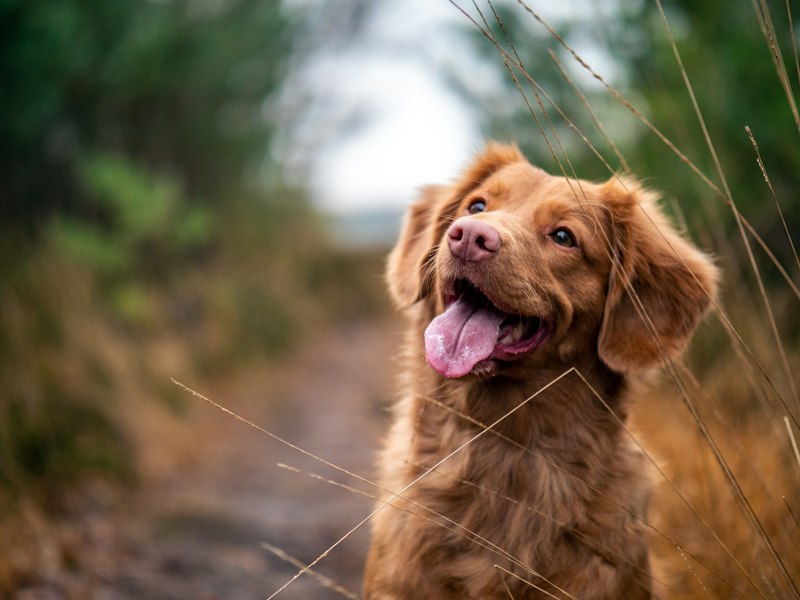
Why Crawfordsburn is the walk everyone recommends
If you've asked around for dog walks near Belfast, someone will have said Crawfordsburn Country Park. It sits between Helen's Bay and Crawfordsburn village on the County Down coast, and it packs a proper variety into one outing: a wooded glen with a stream running through it, a viaduct overhead, farmland fields, and then the payoff — Helen's Bay beach opening out onto Belfast Lough. Dogs tend to love it because the terrain keeps changing, which means noses stay busy and legs stay interested for the whole walk, not just the first ten minutes.
It's also popular enough that you should expect other dogs, family groups, joggers and the occasional cyclist on the main paths, especially at weekends. That's fine for a sociable dog but worth knowing if yours is reactive or still learning recall — the glen path in particular can get narrow and blind-cornered in places, so you don't always see who's coming until you're right on top of them.
Where to park and which entrance is quieter
There's usually parking near the main entrance on the Crawfordsburn side, and another access point down towards Helen's Bay itself, closer to the beach and Helen's Bay railway station. The Crawfordsburn end tends to fill first because it's the more obvious turn-off from the main road and it's where most people head straight for the glen. The Helen's Bay side, especially if you come in via the quieter residential streets rather than the station car park, is often calmer, and it drops you closer to the beach and dune path rather than the woods.
Traffic on the coast road through Helen's Bay and Crawfordsburn can bunch up on fine weekends and around the school holidays, so if you're coming from Belfast or further round the Ards side, it's worth building in a bit of slack rather than timing it tight. Parking fills earliest on the first dry Saturday after a run of wet ones — everyone has the same idea at once.
The glen, the beach and the fields — three walks in one
The glen walk follows the stream down through mature woodland, crossing footbridges and running under the old railway viaduct — genuinely one of the nicest short woodland walks in County Down, with dappled light and a bit of scrambling terrain that dogs enjoy. It's sheltered from wind, which makes it a good choice on the rough days Northern Ireland specialises in.
Follow the glen down and it opens onto Helen's Bay beach, backed by dunes, looking out over Belfast Lough towards the Antrim coast on a clear day. This is the section most owners come for — sand, shallow water for a paddle, and space to let a confident dog properly stretch out, tide and signage permitting. Away from the glen and beach, parts of the park are open farmland with grazed fields, and this is where the walk changes character completely: hedged boundaries, field gates, and livestock that may or may not be in residence depending on the time of year.
None of these three zones behave the same way for an off-lead dog. Woodland cover, open beach, and a grazed field all carry different risks, and the park's own signage changes accordingly through the year — which is really the whole point of this guide.
When does the lead actually have to go on?
There are two separate reasons a dog needs to be on lead at Crawfordsburn, and they don't always overlap in time. The first is livestock. Sheep are grazed in parts of the park, and while grazing patterns shift year to year, you should treat every field gate as a decision point rather than assuming the field is empty because it was empty last time. A dog that's never seen a sheep can go from curious to full chase in about two seconds, and a startled ewe on rough ground is a genuine injury risk to both animals.
The second is ground-nesting birds. Coastal and dune-fringe habitat like the stretch around Helen's Bay is exactly the kind of ground species such as skylarks and oystercatchers choose to nest in, low in the grass or shingle where a running dog won't see a nest until it's already flushed the bird or crushed the eggs. This is typically flagged from around spring through into summer, but the exact dates and the areas affected are set by current conditions and are posted on signage at the entrances and along the paths — that signage is the actual authority here, not anyone's memory of last year.
The honest, useful rule: read the noticeboards at whichever entrance you use, every visit, not just the first time. Management responds to what's actually nesting and grazing that season, so the boundaries move. If in doubt, lead on until you've seen the sign for that particular week.
- Livestock fields: lead on by default, off lead only if you can see the field is clear and the current signage doesn't say otherwise
- Dune and coastal fringe in nesting season: lead on, and keep to the main path rather than cutting through long grass
- Glen woodland: generally more forgiving, but narrow paths mean recall still matters for other dogs and walkers
- Beach: check current local signage for any seasonal dog restrictions before assuming full off-lead access
What the ground is actually like in February
Crawfordsburn in winter is a different park to the one in the photos. The glen path floods in the low spots after any sustained rain, and the stream can run high and fast enough that stepping stones you'd normally hop across in summer are best left alone. Mud is genuinely deep in places, particularly where the path narrows under tree cover and never quite dries out between showers — bring a towel for the car, and don't wear the good boots.
The beach copes with winter far better than the woods do, though it's exposed to whatever wind is coming off the lough, which in a Northern Ireland winter is rarely nothing. On a hard frost the dune grass and upper beach can be genuinely pleasant underfoot; after a storm, expect debris and a stiffer walk back up into the wind. If your dog struggles with the cold or has joint issues, the sheltered glen is kinder than the open beach on the rawest days, mud notwithstanding.
Making it work for reactive, older or nervous dogs
The glen's narrow, twisting paths are the pinch point for reactive dogs — you often can't see another dog coming around a bend until you're both committed. If that's a concern, the beach and open field paths give you far more warning and room to create distance. Early mornings and midweek generally mean fewer people and dogs on the ground, though weekends after a spell of bad weather can surprise you with a rush the first dry day.
For older dogs, the glen has some uneven, tree-rooted sections and a few short, awkward steps down towards the water that are worth walking without the dog first if you're unsure. The beach and the flatter field paths are the more forgiving option for stiff joints, and there's no shame in doing a shorter loop rather than the full glen-to-beach circuit — Crawfordsburn is generous enough that a short version still feels like a proper outing.
If Crawfordsburn isn't quite right today
Some days the tide, the weather, or simply the crowd on a bank holiday make Crawfordsburn the wrong call, and that's fine — County Down has other options within reach and no single walk needs to be the only one in your rotation. What matters more long-term is that your dog is comfortable with livestock, gates, and other dogs on a lead before you rely on recall around sheep or nesting ground; that's groundwork, not something the park itself can teach on the day.
We see plenty of dogs through Johnny's Doggy Hotel who know Crawfordsburn well from their family's regular walks, and it's often the ones who've had steady, calm exposure to livestock and lead manners who cope best with the park's more mixed terrain. If you're ever weighing up dog boarding Belfast or doggy day care near me for a trip away, it's worth mentioning to whoever's looking after your dog which walks they're used to — it helps keep routines recognisable even when you're not the one holding the lead.