
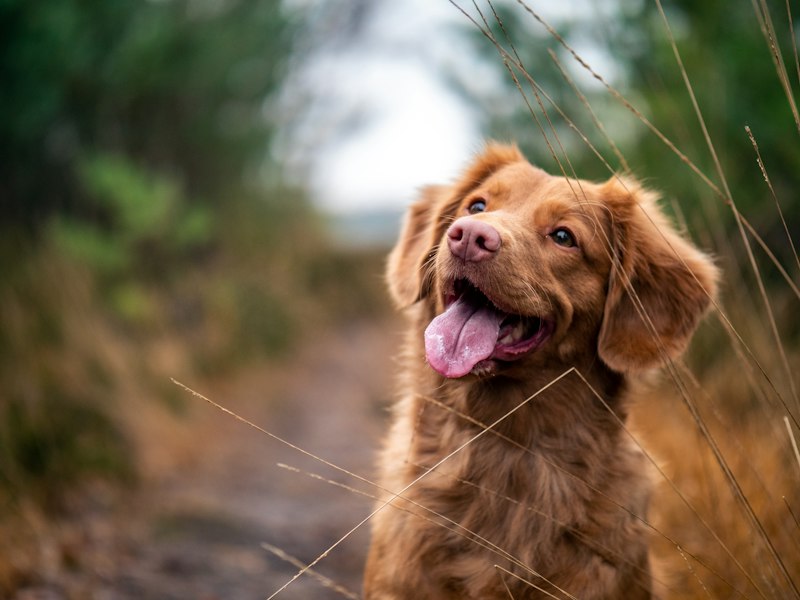
If you've typed something like 'overnight dog boarding for nervous dogs Holywood' into your phone, you've probably already tried the obvious options. A kennels that looked fine online but sounded, on the phone, like a yard with thirty dogs in it. A friend who's happy to help but is away the same week you need cover. A day care that's brilliant for confident dogs but clearly not built around a dog who hides behind your legs when the doorbell goes.
Holywood itself is well set up for dogs — the Esplanade, Redburn Country Park, the hills behind the town — but boarding is a different problem to walking. A nervous dog doesn't need more space or more other dogs to play with. It needs fewer surprises. That's really what this page is about: what a calm, family-run setup looks like in practice, what to ask before you book anywhere, and what actually happens over those first few hours when you hand the lead over.
Why a quiet household usually beats a big facility
Most of the anxiety in boarding comes from noise and unpredictability — other dogs barking down a corridor, strange smells, a different person every shift, concrete runs that echo. A nervous dog's nervous system is already working overtime; a busy kennel block adds to that rather than easing it.
A small household setup, where the same one or two people are around from morning to night and the number of dogs at any one time stays low, gives a jumpy dog far less to react to. At Johnny's Doggy Hotel in Newtownbreda, that's the basic shape of it — a family home rather than a commercial block, with dogs moving through rooms and a garden rather than kennel runs. It won't suit every dog, and it's worth saying plainly: no setup, however calm, removes the stress of being away from you entirely. The aim is to keep that stress as low and as short-lived as possible.
- Ask how many dogs are boarded at the same time, not just how many spaces the business has
- Ask whether the same person handles your dog for most of the stay, or whether staff rotate
- Ask what the quietest part of the day looks like, not just the busiest
What a slow settling-in actually looks like
Nobody's nervous dog relaxes in the first ten minutes, and you should be suspicious of anywhere that claims theirs do. A realistic settling-in looks more like this: the dog arrives tense, sniffs the hallway, won't eat straight away, maybe paces or stays close to a door. Over the first few hours it starts following one person around the house rather than watching every exit. By the first evening it might take a short walk or lie down near people rather than under a table.
The first night is usually the quietest part of the whole visit, in the sense that the dog isn't doing much — not sleeping deeply, not relaxed, just watchful. That's normal. What tends to go wrong is when people, understandably, expect a transformation by morning. A genuinely nervous dog often only starts to properly settle by day two or three of a longer stay, which is one reason a short trial night before a week-long booking is worth doing if you can manage it.
Feeding is usually the first honest sign of progress. A dog that's refused food on arrival but eats a normal meal on the second evening has turned a real corner, even if it still looks wary of strangers at the door.
Does the drive from Holywood matter for a nervous dog?
It's a fair question, because the journey itself is often the first stressful part of the whole stay. From Holywood, getting across to Newtownbreda means crossing the city rather than a short hop — most people come round via the outer ring road or down through east Belfast, picking up the Knock dual carriageway or Saintfield Road towards Carryduff. None of that is unusual, but it's worth checking current traffic before you set off rather than assuming a quiet run, especially around school and commuter times when the Knock and Cregagh Road area can back up.
For a nervous dog, a calmer drive matters more than a fast one. If your dog travels badly, it's worth doing the trip once beforehand just to get there and back, with no drop-off involved, so the car itself isn't tied to a stressful memory. A short stop on the way, a familiar blanket on the seat, and the radio at normal volume rather than off (dead silence in a car can feel odd to some dogs) all help more than people expect.
What to bring so the room still smells like home
Smell does more work than anything else for an anxious dog. A washed bed smells like nowhere; an unwashed one smells like your house, which is exactly what you want. Bring the actual bed or blanket your dog sleeps on, not a spare one bought for the occasion.
Food matters too, particularly in winter when routines tend to slip a bit anyway with shorter days and worse weather. Bring enough of the usual food for the whole stay plus a few days' spare, rather than assuming it'll be swapped for something else — a sudden change of diet on top of a change of house is a lot for one stomach to manage. If your dog has a particular toy, lead, or even just a worn t-shirt of yours, pack it. None of this is sentimental fussing; it's genuinely one of the more useful things you can do.
- Unwashed bed or blanket from home
- Full supply of current food, not a new brand
- Lead, collar and any tags exactly as used day to day
- A note of feeding times and any quirks — won't eat near other dogs, needs the bowl lifted after ten minutes, that sort of thing
How do you know if your dog is actually ready for an overnight stay?
Some nervous dogs are ready for boarding with the right preparation; a smaller number genuinely aren't, at least not yet, and it's worth being honest about that rather than forcing it because a holiday is booked. Dogs that have coped with time at a friend's house, a dog sitter, or even a few hours of day care tend to transfer that coping into boarding reasonably well. Dogs that have never once been left with anyone outside the immediate family are a bigger unknown.
A short trial — a single night, or even a long day visit first — tells you more than any amount of discussion. It lets the dog see the house, the garden, the other people in it, while the stakes are low and you're reachable if it goes badly. Most places offering dog boarding Belfast-wide will do some version of this if you ask; it's a reasonable thing to request and a reasonable business should welcome it rather than push straight to a full week.
What happens if a nervous dog just won't settle?
Sometimes it doesn't go smoothly, and it's worth knowing what that actually looks like rather than imagining the worst. A dog might not eat for the first 24 hours, might shadow one person constantly, might bark at the letterbox or react to a car in the drive it wouldn't normally notice. This is uncomfortable to watch but rarely dangerous, and most dogs come through it within a day or two once the routine repeats itself a few times — same walk time, same feeding spot, same person at the door.
If a dog is still refusing food after a day and a half, or showing signs of real distress rather than ordinary wariness, a decent carer will be in touch with you rather than waiting it out alone, and will talk honestly about whether to extend the settling-in period, shorten the stay, or try again another time with more preparation. Anyone who tells you every dog settles perfectly isn't being straight with you.