
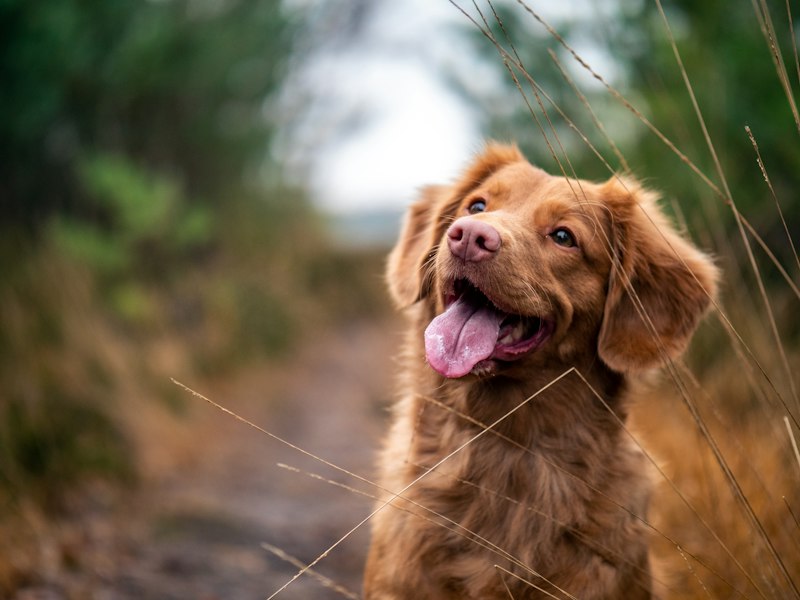
Your dog is nervous, and you're not wrong to worry about boarding
If you've typed something like "overnight dog boarding for nervous dogs Purdysburn" into your phone, you're probably not looking for the cheapest option or the one with the most runs. You're looking for someone who will actually understand that your dog flinches at a dropped lead clip, or hides behind the sofa when a stranger raises their voice, or has never once spent a night away from you without falling apart.
That's a fair thing to want, and it's answerable. Nervous dogs can and do settle into boarding well — but it depends far more on the pace of the first few hours than on anything written on a website. This is about what that pace actually looks like, around the Purdysburn, Carryduff and Newtownbreda end of south Belfast, where the roads are quieter than the city centre but still busy enough at school-run time on the Saintfield Road to matter.
What does "nervous" actually mean for boarding?
Every nervous dog is nervous about something slightly different, and it's worth being honest with yourself about which one you've got before you book anything. Some dogs are fine with people but unsettled by other dogs. Some are the opposite — happy in a pack but wary of new humans. Some are only ever nervous about being left, full stop, regardless of who's holding the lead.
This matters because it changes what "settling in slowly" should look like. A dog that's wary of other dogs needs a boarding setup that isn't a shared pen with four others on the first night. A dog that's fine with dogs but anxious about new people needs a calmer, lower-key introduction from the humans, not a big enthusiastic welcome. Anyone looking after your dog overnight should ask you these questions before they ask anything else — not just "any allergies?" but "what actually frightens him?"
How do you settle a nervous dog in on the first night?
The honest answer is: slowly, and without much fanfare. A dog that's anxious doesn't need a tour of the house, introductions to every resident dog, and a big fuss made over them within the first ten minutes. It needs the opposite — a quiet room to start in, its own bed already laid out, and a human who isn't crowding it while it works out that the floor smells different and the noises are different and you're not there.
In practice that often means the first hour is just sitting nearby, letting the dog come forward in its own time, maybe a short lead walk round the garden rather than straight out onto a busy path. Food usually goes in exactly the same bowl, at exactly the same time, as it would at home — sticking rigidly to a dog's normal routine, rather than trying to distract it with something new, is one of the few things that reliably helps.
It's fair to say the first night is nearly always the hardest. A dog that's a little flat, a bit clingy, or off its food on day one is completely normal and not a sign that something's gone wrong. By the second day most nervous dogs have worked out the shape of the place — where the water bowl is, which room is quiet, who the other dogs are — and that's usually when you see a real difference.
Why does a quiet household suit a nervous dog better than a big kennel run?
A lot of nervous dogs do better in a small, domestic setting than in a large kennel block, simply because there's less going on. A long row of kennels means barking down the corridor at feeding time, unfamiliar dogs passing the pen all day, and a lot of noise a nervous dog has no way of switching off from. A quieter household setup — a handful of dogs rather than dozens, normal rooms rather than runs — gives an anxious dog somewhere to retreat to that isn't surrounded by other stressed animals.
This isn't to say every nervous dog needs to be kept entirely separate. Plenty settle better once they realise the other dogs in the house are relaxed and ignoring them — calm dogs are often the best teachers for an anxious one. The point is that it should be the dog's choice to approach, not something forced on day one.
Where are the quiet dog walks near Purdysburn for a nervous dog?
If a nervous dog is up for a walk at all in the first day or two, it's worth keeping it short, familiar, and away from anywhere busy. The lanes around Purdysburn and the old hospital grounds tend to be quiet outside school-run hours, and there's woodland in that direction that gives a dog plenty of cover and tree scent without the open exposure of a big park. It's the kind of ground a wary dog can ease into gradually rather than being thrown out into a wide, crowded field.
Underfoot, be realistic about the time of year. By February, the woodland paths and anything off the main track tend to be properly soft and claggy after a run of Northern Ireland's usual wet weeks, so a nervous dog already unsteady on its feet doesn't need slippy mud added to the list of things to worry about. Sticking to firmer paths and checking current signage before letting any dog off lead is sensible anywhere in this area, nervous or not — ground conditions and any grazing or wildlife notices can change without warning.
None of this needs to happen on day one. For a genuinely anxious dog, a walk round a quiet garden is plenty until it's eating normally and relaxing in the house. Dog walks near Belfast are there whenever the dog is ready for them — there's no prize for rushing it.
What should I bring from home, and what should I leave out?
Bring more than you think you need. A nervous dog copes far better when most of its world stays the same — its own bed or blanket (unwashed, so it still smells like home), its usual food in the amounts it's used to, its lead and collar, and any toy it actually sleeps with rather than one that's just for show. If your dog is on medication, write down the exact times and doses rather than trusting memory to be passed on accurately.
Leave out anything that adds unpredictability. New toys, new treats, a new bed bought specially for the occasion — all well-intentioned, but they're one more unfamiliar thing for a dog that's already managing a lot of change. Familiarity is doing the heavy lifting here, not novelty.
Should I bring my dog for a trial visit before the first overnight stay?
Yes, if it's offered — and it's worth asking for one if it isn't. A short day visit, or even just a cup of tea and a walk round with the dog on lead before you commit to a night away, tells you more than any amount of reading reviews. You'll see how your dog reacts to the smell of the place, the sound of other dogs, the person who'll actually be looking after it — not a brochure version of all that.
At somewhere like Johnny's Doggy Hotel, close to Carryduff and Newtownbreda, a slow introduction like this is normal practice rather than an inconvenience, and any boarder who's genuinely set up for nervous dogs should be glad you asked rather than treating it as a hassle.